Newfound freedom for all

As Autumn rolls on, our baby chickens are growing rapidly.  The youngsters that we raised as surrogate parents from the incubator are enjoying the A-frame chook house that Stace built – complete with a llama to watch over them (when she’s not distracted eating grass or daydreaming!)

Llama and chook house


Even though our babies are growing quickly, it still takes about 5 months for a young female to start laying.  With the demand for our tasty White Stone Farm eggs amongst our family, friends and work colleagues growing, there was an increased need for more immediate layers – and fast!

Hmmm…where to get good layers quickly?  We could have bought some pullets at point of lay (ready to start laying eggs), but decided instead to make our decision benefit not only us, but chooks in desperate need of a new home.  So, we decided on getting some ex-cage hens.  The commercial egg business demands high production rates – chooks need to be pumping out eggs as fast and frequently as possible.  The hens responsible for Cage Eggs live in small, cramped cages their entire lives, in huge sheds with tens of thousands of hens in each shed.  Although it’s climate controlled and they are fed the best possible ration to get them to produce eggs en mass – they never get to see the sunlight (usually they have extended artificial lighting hours to enable faster egg production), never get to scratch in the dirt, dust bathe or carry out the natural behaviours true free range chooks experience.  Their beaks are trimmed back to prevent them pecking at each other, their necks are rubbed raw against the bars of their cages and their nails grow exceptionally long.

And then, once they get to 18 months, they are despatched.  In the highly demanding world of commercial egg production, a small lessening of egg production in hens that comes after the first year is apparently not good enough to supply intense demand, so their short life of pumping out eggs for our table is done.  And they never once got to see a sunrise.

Many egg producers will sell these 18 month old hens cheaply, so we decided to give 10 of them a go.  We should still get a couple of good years out of them and there’s nothing more heart warming than knowing that you’ve saved an animal from a premature death and given it a new lease of life!  But wow, what a roller coaster of emotion it’s been…

Lumpy head chookWhen we got them out of their boxes, I didn’t quite expect to see them in such a ragged state.  A bunch of Misfits. Bare necks, skin rubbed raw from the bars, pale combs, strange growths on their faces, long curved nails, badly trimmed beaks and empty glazed expressions greeted us dully as we gently lifted them out of the car.  If more people saw these chooks, there would be a LOT less cage egg consumption!

Misfit nails

Their nails had never scratched for grain or bugs and so had never worn down and were in desperate need of a trim!  For many, walking was difficult with such long nails, so we carefully took each hen and gave her a much-needed pedicure.

After a quick inspection, important nail trimming, lessons on how to drink from a water bowl and a dusting with Diatomaceous Earth to get rid of any fleas and mites, we introduced them to their new home – a converted Ford Falcon, to begin their lives as free range pasture poultry.  It’s amazing how quickly they showed their innate chook behaviour, their newly trimmed feet instinctively making delicate scratching movements once they felt the dirt between their toes for the first time.  To our delight, within hours they were scratching in earnest, dust bathing and enjoying the sunshine on their backs.  And their new lease of life.

Ex-cage layer red bum

3 misfits

In the Falcon – or Chook Wagon as we call it, Stace had removed all of the seats except the driver’s seat and decked out the car with roosts and a wire floor so that their poo will fall through.  By day they explore the surrounding pasture and by night, they are tucked up safely in their car roost where we can close the doors and keep them secure from foxes. And drive them to their new bit of pasture for another day’s foraging and discovery!

To assist in their assimilation to their new lifestyle, we have combined them with our Araucana pasture flock, complete with strong and strapping rooster Aragon, who protectively watches over them and helps to find them food.  Since their arrival a month ago, we have been amazed at how quickly they have turned from prison inmates to freedom fighters – from blank stares to sharp, bright eyed problem solvers.  Their combs and wattles, once pale, are a vibrant crimson and their feathers are growing back and thickening around their necks and bodies.

ex-cage layer 4 weeks on

peering chook sml

It hasn’t been smooth for all however – the demands of intense egg production have taken their toll with 3 hens succumbing to complications internally with their internal egg production systems and unfortunately passing away.  I call it Clapped-out Cloaca syndrome! But, they got to see a sunrise or two, feel the dirt between their toes and get a taste of true freedom – which is more than 15,000 of their peers got to experience.

For the most part, seeing each of them show their true personality, find romance with the rooster and enjoy hours of exploring, foraging, clucking and freedom have been worth the effort and emotional roller coaster for all of us!  They are affectionately called our Misfits.

Neighbouring the Misfit area in the back paddock is the A-frame.  With the dry weather impacting on insect numbers and available food for foraging and the daily chore of having to drag the A-frame to a new spot each day, we decided that they were big and grown up enough to ‘leave the nest’ and experience true freedom.  We let them out of the A-frame to forage further afield. After some initial training on getting in and out, they are now pros – and happily explore the field for bugs, returning to the A-frame in the evening to roost, where we can lock them up safely.

Each day they mingle with the Misfits, teaching and learning from each other and experiencing the wondrous freedom of the back paddock.  Chickens with very different backgrounds, now both enjoying the same freedoms and lifestyle here at White Stone Farm.

chicken photo bomb group

Bringing ex-cage hens onto White Stone Farm has been a real eye opener for us.  Seeing the state they were in: their listlessness, injuries, hideous growths, overgrown nails, maimed beaks and psychological stress really puts a stark reality to the cage egg business and hammers home just how commercialism for high demand products can make life absolutely miserable for these chooks.  Whereas all 27 members of the European Union, Switzerland and 7 states in the US have banned cage egg practices, Australia still allows cage hens and sadly over 55% of the consumer market still buy them.  For many consumers, fast food outlets or large catering companies, buying cage eggs vs free range is down to cost, without regard for the high cost of comfort and ultimately a short life that these animals face so that we can save a couple of dollars.  But that choice really does make a difference – to the lives of chooks and ultimately shapes the demand for better living conditions for hens.  So the next time you buy your eggs, consider the conditions the chooks may have endured to lay those eggs…and vote with your buying dollar.  Make your opinions count when eating out – talk to your local restaurants, cafes, fast food outlets and ask if they use free range eggs (and if not, why not?!).  Better yet, get your own backyard chooks and enjoy your own fresh eggs every day, as well as the sheer joy of watching these amazing birds eat your scraps, rid your garden of pests and go about their hilarious chooky business.  They are a fantastic (and highly entertaining) investment to any household!

Chook look

Marching into Autumn at White Stone Farm

Phew – a long hot summer is now behind us.  Scorching temperatures, tinder dry landscape, fierce winds and bushfires here, there and everywhere!  The hills and paddocks are a golden yellow of dry grass stalks or (as in the case for some of our paddocks) sun-baked earth as the new grass seeds wait for autumn rains to encourage their new green growth.

The incendiary landscape and strong winds were a real concern some days, with the car packed with valuables and important documents and fire plan at the ready should we need to evacuate.  Luckily it didn’t come to that, but there were some anxious days watching wind direction and hoping that fires burning a few kilometres away wouldn’t come racing over the back fence.  We chose White Stone Farm carefully, ensuring we are not among thick bushland (the tragedies of Black Saturday bushfires here in Victoria were still fresh in our mind when we bought the property in 2011 and served as a good reminder that being engulfed by trees can also lead to being engulfed by flames).  The property backs onto large tracts of open pasture and grassland, although grassfires can also be incredibly fast and destructive.  We kept our eye on this one burning not far away…

Bushfire

The dry spell was broken by a watery reprieve the other week, prompting some new growth to poke its green shoots through the dirt (only to be eaten by hungry chickens!) and the weeds are coming back with a vengeance!

Purselane

Once, I would have been upset with the advent of weeds such as Purslane (left), Mallow and Nettle but with my trusty Weed Forager’s Handbook: A guide to edible and medicinal weeds in Australia (by Adam Grubb & Annie Raser-Rowland), I am looking forward to incorporating these highly nutritious plants into our diet instead!!  It’s amazing the plants we overlook or disregard because they are ‘weeds’, when in fact they are incredible nutrient packed leafy greens – loaded with more vitamins and minerals than greens off the supermarket shelves can offer.  And what’s more – they grow prolifically in our poor soil and harsh weather!

Summer has also been a time of chickens, chickens and more chickens!  We incubated a big batch of eggs for 3 weeks over January-February, but towards the end we had little hope that they would survive as the incubator overheated on some of the really hot days and then we lost power for 12 hours, so they cooled down considerably.  But, proving just how resilient they can be, 19 baby chickens of different shapes and sizes made it out of the egg successfully over 4 days.

Incubator chicken

Some of the chicks needed a little helping hand as the humidity in the incubator had dropped, leaving them in danger of drying out too much in the long hatching process.  I was ever vigilant, ensuring they were gently sprayed with warm water regularly to prevent from drying and dying during the hatching process and was there to greet them as they finally freed themselves from their calcium confines.

Newly hatched

The result – some very cute, multi-coloured fluff balls!

Fluffy chickens

Newly hatched chicken at White Stone Farm

New chick at White Stone Farm

Pingu chicken at White Stone Farm

As they grow they have been moved into larger accommodation…from a polystyrene hot box, to a cardboard brooder box, then to a rabbit hutch to acclimatise them to outside conditions and play in the dirt for natural scratching, dust-bathing and foraging….

Chicken hutch

Baby chickens dustbathing

And finally into the Chicken Shangri-La A-Frame.  Stace did a great job of designing and building this chook house, which has an automatic waterer and feed station and is on sleds so that we can drag it to a new part of the paddock for fresh foraging.  The new chickens LOVE IT!

Chook house at White Stone Farm

Due to our presence at many of their hatching events, most of the chicks have formed a strong connection, regarding us as Mum.  They love to clamber all over us and snuggle up in our laps for a nap in the morning sun.

Chicken on shoulder at White Stone Farm

The summer’s trying conditions have caused a rethink on some of the things that are possible and those that are very challenging at White Stone Farm.  Chickens however seem to be doing well, providing us with eggs, meat, antics and plenty of ‘awwwww…’ moments and laughs.  As the broods continue to expand and the pastured poultry flocks are increased in the back paddock, more weird and wonderful chicken accommodations are being designed and built.  Stay tuned for the newest Chook Wagon…currently in development!  You take an old Ford Falcon…then rip out the seats and floor….

The Highs and Lows of Ethical Meat

One of the biggest reasons that we moved out of Melbourne and onto our own land at White Stone Farm was to be able to produce our own food.  Where food comes from is important to us.  What chemicals have been used in the production of fruit and vegetables, what sort of conditions were supposedly ‘cage free/barn laid/free range’ chickens kept in (you’d be surprised just how little area is allowed for commercial ‘free range’ egg production) and how long has that leafy green been in cold storage and trucked across the nation to get to our plate??  When you buy your produce from a supermarket, you can never be really sure of the answers to all of these questions.  And that just wasn’t good enough for us.

The same goes for meat. Top of our concerns is the treatment of animals, the conditions they are kept in and very importantly, how much stress they had to endure as they meet their maker to become made into meat.  In today’s mass consumerism for meat products on a huge scale, it requires a huge need for thousands of animals to supply the demand.  And conditions are not always so favourable.

In today’s society, meat is no longer a luxury – it’s a daily expectation.  That special Sunday roast of chicken or rack of new season lamb is not a huge treat like it used to be, it’s now yet another meal amongst others throughout the week that is centred on meat.  Our meat now comes neatly packaged, vacuum sealed and not in the slightest resembling the animal from which it came.  We can switch off the thought process about where it came from while we decide skin on or skin off…oyster blade or chops…breast meat or thighs…and forget the great amount of resources that went into producing, rearing and finishing such a beast to become our vacuum sealed package of protein goodness.

This disconnection and lack of appreciation for the huge amounts of water, feed, time, energy and effort…and the ultimate sacrifice of life that went into producing that package of meat can also lead to easy wastage or poor cooking that doesn’t do the animal justice for the great sacrifice it made for your dinner.

Aware of all this, but also not wishing to become vegetarian (and if you are, my hat’s off to you…but we like eating meat), we have made the decision to be choosy about where our meat comes from and to be involved in rearing it and preparing it for the table as much as possible.  On our small acreage, this is possible with ducks and chickens – and a little more difficult with larger animals.  And no, the llamas are not on the menu!  (Apparently they taste good…but they’re too damn expensive to eat!!).

Most of our protein comes from our young roosters, who are impossible to keep after a certain age as they fight with the head rooster (Henry II rules the roost in our house flock).  The lucky hens go on to live out their days foraging, clucking and laying eggs.  The roosters that we don’t or can’t breed from end up in the freezer.

Shadow the rooster

Plucked Roosters

With such a high percentage of male chickens, this has been an intensive process at times.  I’ve shed tears, I’ll admit.  It’s really hard to raise these gorgeous birds, get to know their personalities, care for them and then decide on the end.  But that’s what every meat eater should experience.  The girl from the ‘burbs, whose meat has always come from the supermarket, is now front and centre of who lives and who dies for her meal – and actively involved in dispatching, plucking, preparing, cooking and savouring.  From Cradle to Plate.

Freezer roosters

It’s not easy, but at the end of the day I can safely say that I was involved in every step.  I know that the chicken or duck on my plate had the most amazing life, wanted for nothing, was safe, warm and happy until the last day and that the end was quick, humane and very respectful.  It’s much more than millions of other meat birds get in exchange for their life.

Once the delicious culinary creation has been loving prepared and set on the table, we’ll drink a toast to the bird that died for our meal, remember them, reminisce perhaps if they were particularly charismatic and appreciate their sacrifice for our plate and bellies.

And that’s what meat consumption should be about.  Every time.

So have a think about where your meat has come from.  If you don’t have the luxury of raising your own, check out local producers and free range meat growers in your area. And most importantly, stop and reflect on where and how your food gets to your plate. Then, and only then, will our humane standards and ideals be enforced and better reflected in the commercialism of meat production.

Poultry Politics

Our poultry are an important part of White Stone Farm.  They are our natural insect control, fertilizer makers and feathery entertainers.  (And one day, some of them will make it to the dinner table as well).

Poultry are fascinating.  The way the chickens go about their business in their endless search for tasty bugs, the way they relate to each other in the flock, maintain their pecking order, interact with the other animals, peck, preen, dust-bathe, squawk, cheep, cluck, scratch, explore and cock-a-doodle-do (for the rooster at least!) – all of that is really interesting stuff!  And it entertains us to no end!  Except the cock-a-doodle-doing at 4am…

Chicken peckOur house chooks – Avalon, Bentley (and her 2 chicks), Commanche, Delorian, Eldorado (and her 9 fluff-ball chicks), Ferrari, Galaxy and rooster Henry Ford (yes, all alphabetical and car-themed…) live in the old stables and go about their business of scratching and exploring around the house, garden and nearest paddocks.  On a hot day their favourite spot is under the house, so it’s not uncommon to be sitting in the lounge and have Henry cock-a-doodle-dooing under your feet directly under the floor!

Eldorado and newest babies

As well as chickens, our poultry extends to ducks too – our beautiful but messy puddling Pekin ducks who add an extra layer of fascination as they do their ducky thing – and their antics as they interact with the chickens, horse and llamas.  We started with a male (Benghazi) and 2 females (Aurora and Calais – although I can’t tell them apart now so they are Duck and Duck!).  They happily live in the poultry stall of the old stable as well.  They are also excellent look-outs for aerial predators such as eagles, hawks and falcons (you can see Ben scanning the sky in the photo), warning the others to take cover when necessary.  I’m sure it’s saved many a small chick over the last few months.Pekin Duck close up

Recently, the poultry crew were joined by three Silkie-cross chicks that Delorian hatched and raised as her own (we secretly slipped them under her when she got broody!).

Delorian and her babiesThey have grown so fast and have started their teenage voice-breaking version of crowing, so our guess is they are all boys and likely destined for the table.  Due to this fact, they have not been bestowed with names. The girls don’t tolerate them much and it’s only relatively recently that they’ve been allowed to join the crew in the stables (prior to that their hangout was the woodshed).

Just like Delorian, our other Pekin Bantam chook, Eldorado, has proved an excellent surrogate mum!   With a plethora of eggs and Pekin Bantams prone to broodiness, we set a few duck eggs under Eldorado to see what would happen.  Lo and behold, she diligently hatched out 3 baby ducklings!  Clever girl!Pekin ducklings at White Stone Farm

We lost hours watching their antics as they followed their chook mother around and she was a wonderful, protective and attentive mum.  She even allowed them to go swimming and would dutifully wait on the side of the small puddle as they mucked about in the water.  They understood her chook calls for “Come on..” and “Oooh quick, I’ve found something tasty…”Eldorado foraging with ducklings

However, as they grew, they soon began to dwarf her in size and so she decided they were obviously fully grown and promptly shacked up with the rooster again.Eldorado and older ducklings

This caused some Duck Drama.  With their mother no longer protecting them, Benghazi the drake started to harass and attack them.  Fearing for their safety and comfort, I tried to quickly move them into the garlic patch before work (Mmmm…I love the smell of duckling poo all over your clothes in the morning!).  Here they could live within the safe confines of the garlic fence, protect our crops against insects and get back to puddling around undisturbed again.  Oh-so-happy not-so-little ducklings once more.Garlic ducks

Our adult ducks have not been without their own baby dramas too!  Both females became broody, so we set some eggs under them (both their own and some chicken eggs for the hell of it!).

Duck mum and 2 babies

The duck eggs hatched, and we had equal doses of elation and tragedy as we some ducklings did well and others fell fate to being abandoned overnight, drowning or being attacked by ravens.  Our Pekin duck females aren’t the most diligent and doting of mothers it seems!  I’m trying hard to toughen up with each tragedy – it’s all part of farm life…but it’s sometimes hard as a girl from the ‘burbs to see so many cute things die and not get upset or attached.

But, I’m getting better at not bursting into tears so readily now…

The Poultry Politics continues to forge ahead.  As we expand the chicken numbers and breeds at White Stone Farm, we are also expanding where and how we house them and beginning our integrated Poultry Pasturing system.  Based on Joel Salatin’s model of having mobile transport and allowing chickens to forage on the pasture during the day, Stace converted our paddock-bomb ute into a luxury lockable chook pad!  By day they scratch and peck at the myriad of bugs found in the pasture and leaf litter near the trees and at night they are trained to put themselves to bed in the ute, where we can lock them safely away from cunning Mr Fox.  Once safely locked away we can then drive them to their new bit of fresh pasture and shade, ready for the next day of foraging.

In the search for our newest chook breed, we decided that weirdly coloured eggs and a lavender coloured chook sounded fascinating, so procured a family of Araucana chickens consisting of Mum, Dad and 8 growing chicks.  Renowned for their bluish green eggs, we  decided to keep this group separate from the others and begin our Pasture Chickens integrated model.  Araucanas are perfectly suited to open pasture scratching, with their long legs, strong claws and jumpy nature, just right for turning over the leaf litter in search of tasty grubs.

They will soon be joined by our llamas to assist with flock guarding during the day.  Llamas do not tolerate foxes and can make excellent guards, so it’s another great way to integrate our farm animals to assist in our open and innovative methods of farming!Ute chook tractor

With all of our Poultry Politics, it sure keeps us busy and very entertained.  We aim to continue to expand into other heritage breeds of chickens, ducks, meat birds and egg layers, so watch this space for more poultry politics updates!

Move Hay While the Sun Shines

Here at White Stone Farm we are often presented with challenges.  The hot, dry summers, very wet winters, poor drainage over most of the property, heavy frosts in winter, the house that needs a bit of TLC…but one of the biggest challenges we face is our lack of good topsoil.  The farm is situated on an ancient alluvial floodplain of heavy clay, with some of the oldest soil this Earth has to offer (Ordovician soil, circa 500 million years for those playing at home…).  In winter the clay holds water, in summer it cracks and dries as hard as concrete, the clay shrinking and expanding depending on moisture content.

WSF landscape sunset

Prior to our purchase of the land, the property was also overstocked with horses, creating further compaction of the soil.  It makes for one slippery clay-ridden landscape in the depths of wet winters and is in desperate need of some more organic matter to boost the growing capacity of the land.  Phew…so glad that we like a good challenge!!  On the positive side, clay already has a number of nutrients that we can build on for our soil structure, we just need to improve the drainage and help it along a bit with some more organic matter.  Hey, at least it’s not sand!

To counteract the immediate problems with drainage and lack of good quality topsoil, we decided to grow higher than the flat ground level, by building raised mound beds of manure, worm castings and soil.  We also tried to utilise the benefits of the water-holding capacity of the clay by digging a trench to capture water, filling it with branches and green material for nutrients and then filling it over with a mound of earth.  This ‘hugelkultur’ raised mound technique is proving very popular in permaculture and has been a long held growing technique in Europe for hundreds of years. (Ducks are optional…).

Garlic patch early days

Another method we were interested in is the use of semi-decomposed haybales as grow beds.  When combined with some additional nitrogen and watered in well, this provides a ready resource of nutrients as the hay breaks down and the raised height gets the plants off the water logged ground (and easier to access, similar to raised garden beds).  Hmmm…but we needed a ready resource of hay bales on a very limited budget…

Enter the Great Wall of Hay.  A huge structure of half fallen over, decomposing hay that had been stacked in someone’s paddock years ago and had become an interesting landmark between Clunes and Creswick.  The bales looked perfect and we had spent the last 18 months eyeing them off as we drove past, thinking of the wonderful mulching value of such semi-decomposed vegetative material.

Great Wall of Hay

After making a few inquiries, we finally tracked down the owner of the hay – and it turned out to be a neighbour who leases extra land down there!  He happily told us to take as much as we wanted, just lock the gate when you go.  Woohoo!  We celebrated as if we had won Tattslotto…for us, it’s nearly the same thing!  Now to logistics…

The bales, although in various states of disrepair, were massive.  Each bale weighed up to 200kgs.  This would be no easy task and we would need a big truck, truck driver, two tractors and time.  As the festive season holidays offered us the rare occurrence of time off together, we organised to rent a truck, I dug out my Medium Rigid truck licence and we enlisted the help of another neighbour and his whizz bang tractor to assist in off-loading the bales back at White Stone Farm.  Stace pottered the 10 kilometres down to the site in Laurall, his old workhorse of a tractor (she’s named after the beautiful property we got her from) and we picked up the truck – and I quickly had to remind myself how to drive such a monstrous beast of a thing with its ancient gearbox!

Truck driver Prue

For two solid days we hauled hay.  I built up muscles in my left arm and shoulder that I didn’t know I had whilst fighting with the truck’s gear box and Stace became an expert on how to gently pick up and manoeuvre a bale with the forks of the tractor without it falling apart and without breaking the precarious, weather damaged baling twine (he had LOTS of practice!!).

Load after load was gently hoisted up onto the truck then secured and I would make the slow and careful drive back to the farm.  Then Stace (or our wonderful, helpful neighbour Rod) would help to get them off the truck with the borrowed tractor.  It was hot, dusty and windy work.  We were up with the sun and on-site early to tackle the next mountain of hay and tumbled into bed sore and exhausted late each night.  Not the most relaxing way to enjoy your Christmas holidays, but a very rewarding and productive couple of days.  Stace spent an additional day loading up the tandem trailer with a couple of bales at a time for an extra day to maximise the ability of having a tractor to load and unload at each site.

Delicate hay removal

Hay truck and tractor

And voilà! After all that hard work, we now have gorgeous rows of raised hay bale grow beds!

Our new hay bale grow beds

The haybales will decompose for a couple more weeks, to allow them to warm up with the decomposition process and then cool down.  Then they will be ripe for planting!  We have some seedlings in the Thermal Mass Greenhouse that are just waiting for a lovely new grow bed…

Toilet roll seedlings

Corn seedlings


As you can see, our newest trial with toilet rolls as seedling pots is also going well…these can be planted straight into the ground, as the cardboard will rot away once buried, preventing the need to remove the fledgling plant from the pot and possible root shock.

The Magic of Springtime

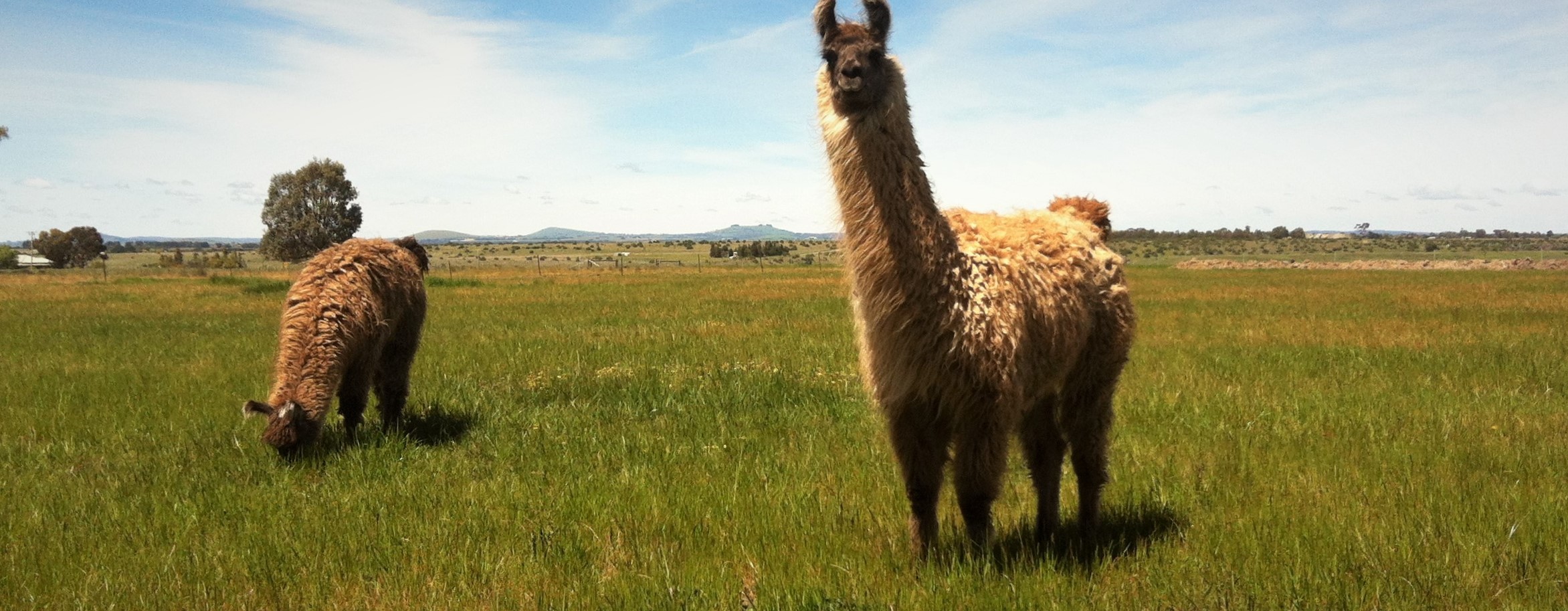
The chill of Winter is leaving the landscape and the warmth of Spring is finally upon us. Thank goodness!!  Those -2°C mornings (down to -6°C one day…brrrrr!) are behind us for another year and we can look forward to longer days, more sunshine and a verdant, productive landscape.  Even the llamas are happy about the plentiful, fresh green growth…

llama landscape

Spring is my favourite time of the year, a reminder after the dry summer and cold winter that there are ideal growing conditions to be had in this part of the world, blue sky days, clement weather and a myriad of birds filling the farm with a joyful chorus as they do their birds and the bees stuff.  Nests are popping up all over the place, birds are courting each other, plumage colours are enhanced (even our male duck’s bill gets a bit more orange and he struts around proudly!) and it’s a great reminder of the joys of new life.

The Welcome Swallows (Hirundo neoxena) are building their nest yet again over the top of our back door, chirping indignantly at us when we dare enter or exit the building.  Their poo is collecting in piles as they roost and raise their little ones.  We don’t mind them – they are excellent insect predators, wheeling about in the sky all day hawking insects on the wing.  Who needs a bug zapper when you have these gorgeous birds?!

Welcome Swallow nestling

Their first set of young are primed for take-off – these birds are different to so many other nesting species in that they have to know how to fly the moment they leave the nest.  Unlike other birds that can hop around after mum and learn how to take longer flights, Welcome Swallows need to get it right the first time or it may be the last.  These birds often like to nest under bridges and above water.  Luckily for these little ones, if the first flight fails, we’re there to pick them up off the ground and pop them in a hanging basket to try again later…

The Thermal Mass Greenhouse is complete and rapidly producing a variety of salad greens, tomatoes, silverbeet, radishes, pak choi, capsicums, chillis, strawberries and Japanese mustard greens.

October greenhouse

tomato view greenhouse

silverbeet

salad greens


Greenhouse cucumberStace’s hard work getting it complete in the early stages of Winter proved fruitful as we have an early production of cucumbers and our delicate herbs were protected from the damaging frosts.

We have chosen a variety of heirloom varieties as well as old favourites.  Part of our ethic is to open up people’s eyes to the vast array of different types of fruit and veg out there, the heirloom varieties that offer delicious flavour, different colours and textures that have been developed over the millenia, rather than developed for hardiness to withstand thousands of kilometres in the back of a refrigerated truck.

As the aquaponics system and adjoining dam require some finishing touches, we are hand watering each morning – and have a supervisor on site to ensure that it’s done properly!  She observes the activities closely…and waits patiently for a pat or a carrot!

Jess greenhouse

Once the aquaponics dam is complete, the nutrient-rich water will circulate through on a timed watering system and flow down through the specially designed beds and seedling table.  Yay for less hand watering!!  Stace already has plans to build more greenhouses, with even more ideas and modifications, here at White Stone Farm.

Rambling rose

And with the magic of Springtime comes the beauty of colour to the landscape after a drab winter. Rambling roses are resplendent in their pink finery and their perfume scents the breeze.  I love watching the change in colours, as the grey skies make way for blue and bare trees bear blossoms in Spring.  It’s a beautiful reminder of how gorgeous nature can be – and it gives the bees something to buzz about too!

Bees

Here’s to many more warm spring days, happy pollinators, lush landscapes and sunshine!

Winter wanes at White Stone Farm

With its last gusty, frosty breath, winter seems to be finally waning here at White Stone Farm.  The warmth of spring is starting, the fruit trees are in their flowery finery of pinks and whites and the pastures are becoming verdant and lush once again.  Ah Spring, my favourite month at the farm as the landscape dries out after its winter deluge.

White Stone Farm blossom

Golden rays and deep blues
White and pinks and purple hues
Heady scent upon the breeze
Will likely bring hayfever’s sneeze
But Spring is welcomed in all her glory
To help us with our White Stone story

A change in the seasons also sees a change in birdsong.  Birds quiet, hidden or holidaying somewhere else during the colder parts of the year are back with their songful presence – Grey Shrike Thrushes delight us with their whistling and Striated Pardalotes call and flit amongst the Eucalyptus trees near the house.  The Welcome Swallows have returned and are again nesting above the back door, their indignant calls berating you if you disturb them when going in or out of the house.

And we have some new birds to add to our flock – three little ducklings!  When our broody Pekin Bantam chook took a fancy to keeping three Pekin Duck eggs warm, we thought ‘what the hell, let’s see what happens’ – and nearly 4 weeks later, after some slight resurrective assistance from Stace one early Sunday morning (involving a duckling near death, warmed pot on the stove, make-shift desk lamp heater box and a dose of good luck) our little baby ducklings took their first cheep and take on the world.  Now three little growing bundles of fluff, they are getting more adventurous and keep their surrogate chook mum busy trying to keep track of them all!

The other chooks regard them curiously, the adult ducks ignore them entirely!  They may grow up with a slight identity crisis…but they are taking like ducks to water (literally!), enjoying their well supervised swimming lessons in the remaining paddock ponds throughout the farm.  Their first-time mum, Eldorado, is taking it all in her stride and proudly watches over her young charges.  I can lose hours watching them, a term we now use is being ‘duckmerised’ by these little duckling darlings!

And taking advantage of the still malleable clay, Stace has been hard at work creating the additional features for our Thermal Mass Greenhouse by building an adjoining aquaponics dam next door.  This will enable a cyclic system of water to flow through the grow beds in the Greenhouse, whilst sustaining a population of yabbies and native fish that we can also enjoy consuming.  I think Stace just enjoys playing on his new back-hoe to be honest and has a myriad of other dams planned for White Stone Farm as we deal with drainage issues and improve our landscape contouring for better run-off design.

So much happening and so much yet to come for spring has sprung!  And with Daylight Savings starting this weekend, we’re looking forward to packing even more adventures on the farm into our daylight hours!

What’s New at White Stone Farm

Wow – how quickly the year is disappearing!  No sooner did we enjoy the golden hues of autumn, then winter approached with bracing winds, rain and more rain, sub-zero temperatures and more rain.  Did I mention rain?  How sad the extra water tanks aren’t in yet!  But the ducks think it’s the best thing in the world – the whole property is one big swamp, just ripe for puddling around in!!

Ducks love rain!

So far, our record coldest morning was about -6°C.  The landscape was blanketed in white icicles, giving everything a lacy cover that crunched underfoot. Nearby towns had snow!  Even the weeds looked pretty in their icicle finery.

Aside from the cold, there have been some glorious days of winter sunshine, enabling Stace to get out and make some amazing changes to the White Stone Farm landscape. The rain and high clay content on the property does make anything to do with dirt or driving around the property a lot more challenging and it’s caused Stace huge frustration as he slips and slides around the block.  In future years we won’t be doing such grand manoeuvres in the slushy, slippery winter but this year we need to get lots done before spring.  Despite the trying conditions, Stace has done an amazing job at moving earth to create some innovative infrastructure and effective grow beds…

A straw bale, thermal mass Greenhouse…

And a range of fantastic Hugelkultur (mound) raised beds planted with bare-rooted fruit trees and a myriad of crops in others…

Hugelkultur fruit beds

More details and a How-To guide on making these amazing structures is to come – watch this space!

And finally, the beautiful chooks, my beloved girls who entertain us to no end with their antics have been helping weed the garden and are constantly on the look out for bugs, worms and any other source of protein to help make their delicious farm fresh eggs!

The chooks love to help!

It’s always busy and always lots of fun at White Stone Farm!  We’re looking forward to some warmer weather and the bursting of new crops and greenery in spring that is just around the corner.

30 days at White Stone Farm

A quick glimpse of what can happen in a month at White Stone Farm!

Recently I was asked by a fellow-blogger friend to contribute a guest blog detailing my life for 30 days.  The blogger is Christie Peucker, who has just returned from an epic year-long adventure around the globe where she did weird and wonderful things for a month at a time to celebrate and tick off her bucket list.  It’s a fascinating look at the adventure of a solo female traveller in some pretty incredible places.  Christie has now set up 30 Days – The Collection series on her website, asking people to contribute their 30 days of life or adventure – and I was very happy to contribute the crazy antics of daily life at White Stone Farm.  Read on for a taste of my month of musings.  And if you’d like to check out Christie’s blog of her amazing adventure (or help her publish a book about it!), go to: http://www.30days30years.com/

30 years = 30 days of a Tree Change

In a sudden moment of epiphany as we began our 30’s, my partner and I decided that we wanted out of the smoggy city, the hustle and bustle and sprawling suburbia and headed for the hills for a new life of fresh air, wholesome veggies, strong community, country living and a small-acre farming lifestyle.

White Stone Farm family

Within a month we were moving our jobs, lifestyles and futures to an idyllic country township with dreams of creating a sustainable farming venture and merely 6 months later buying and settling on a 10 acre property near Clunes in central Victoria.  Nestled on an ancient volcanic landscape, with huge gum trees that have watched over the land for over 500 years, we began to make our home in the rustic weatherboard farmhouse and named the place White Stone Farm.

The months here are much different to my once cosmopolitan life in the inner suburbs of Melbourne.  Brunches at cafés, popping over to a friend’s place for a coffee or catching the latest movie now take much more planning and a 2 hour drive. Lazy sleep-ins are now replaced with dawn rising to ensure that all the animals are fed and watered before heading off to my full time job in the nearby town.  Luckily I’ve managed to keep my old job from Melbourne and move it to a more rural area to tide us over until the farm income kicks in.  It’s a busy transition period as I balance full-time work and farm life.

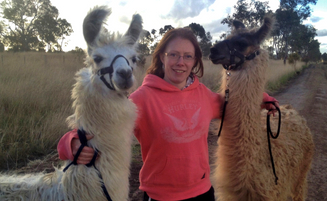
Life is now filled with the antics of horses, chickens, ducks and my favourite new animal – llamas!  They are friendly, engaging and fun.  Plus they provide great manure for the farm and keep the grass down.  To diversify our farming business, I have plans to also run tourism activities such as Llama treks into the nearby forest; so much of my spare time now goes into training three young, spirited but friendly llamas to become faithful and dependable pack animals.

It’s not how I thought my life would turn out, but it’s so much fun!  Here’s a glimpse of an average 30 days for us at White Stone Farm:

Llama at White Stone Farm - Brittany

Day 1-7 – Brittany, our first llama is returning to White Stone Farm after staying with some friend’s llamas for 2 months.  She is welcomed by our two newest llamas with a volley of spitting and chasing.  Poor thing, she’s the oldest and now at the bottom of the pecking order it seems.  But it’s lovely to soak up the sunshine and watch them frolic.

Throughout the week there are lots of things that need to be done: veggies need watering, llamas need training, full time jobs need attending, animals need feeding and things always need fixing.  This week it’s the fences after Brittany escapes the paddock.  I don’t blame her – the others were being mean.

Day 8-14 – The soil here is heavy clay with poor drainage and leaves a bit to be desired.  So, this week is Compost week as we try to improve the organic health of the soil and boost our worm population.  We collect all sorts of mulch, garden clippings, kitchen scraps and a heap of manure from the paddocks (thank you llamas and horse!) to make amazing compost.  Mother Nature helps us out with some heavy rain.  With rain pouring outside, our nights are spent poring over books about worms and soil microbes.

And, as always…veggies need watering, llamas need training, full time jobs need attending, animals need feeding and things always need fixing.  This week it’s the roof, which has sprung a leak.

Garlic Planting

Day 15-21 – With our soil now ready, it’s time for our first cash crop to be planted. Lovely organic garlic bulbs that we harvested from a friend’s farm last year.  The individual cloves are popped straight in the ground, covered with the now rich organic soil and watered in along with good wishes.  A little backbreaking, but we happily work side-by-side in the fresh air and sunshine – a different kind of quality time together and a rewarding few days.

And, not to forget…veggies need watering, llamas need training, full time jobs need attending, animals need feeding and things always need fixing.  This week it’s the tractor, which has mysteriously stopped in its tracks.

Farm Fresh Eggs

Day 22-30 – The month has flown by but this week is exciting as we get some new chickens to the farm.  I never thought that I would be savvy in chicken breeds, but I eagerly await the arrival of my Australorp and Light Sussex hens to add to my Euribrid Browns and Pekin Bantams.  These new arrivals are renowned for being consistent layers and good meat birds.  Perfect.  They settle in with a certain amount of clucking, feather ruffling and find their place (literally) in the pecking order of the other hens.  And the result is lovely fresh eggs every morning for breakfast!  I always feel a childlike delight in finding eggs nestled in the straw inside the chicken coop each morning.

And, as always…veggies need watering, llamas need training, full time jobs need attending, animals need feeding and things always need fixing.  This week it’s the mains water pipe, which has sprung a leak somewhere in the front paddock.  Sigh.  Never a dull moment.

Although we’ve only just started, we have big plans to create White Stone Farm as a place of Sustainability, Innovation and Education.  To offer farm-stays, sustainability courses, llama treks, fresh produce, artistic retreats and much more.  Life is filled with plans, challenges, discoveries and delight as we work towards our new goals and dreams.  It’s a far cry from my cosmopolitan city-dwelling days, but now I wouldn’t swap it for anything!

Learn more about our journey at:  www.whitestonefarm.com.au and come up and see us sometime!

Winter on the Doorstep

Brrrr…winter is on its way at White Stone Farm!  Crisp, clear nights with millions of stars ablaze in the sky turn to frosty mornings and a landscape blanketed in icicles of white.  The grass crunches underfoot as I brave the frigid air to feed the early morning crew.

Jess is always the first at the gate (or back door if she’s near the house), jets of breathy steam blowing from her wide equine nostrils.  She whickers good morning and her ears prick forward at the promise of carrots.

Frosty llama fleece!

The llamas line up eagerly at the fence, a thin layer of frost glistening on the top of their thick woolly coats.  Stace spent days putting up a cosy shed for them, but it doesn’t seem like they’re using it on the cold nights yet.  They jostle each other when their red breakfast buckets appear.

And lastly the poultry procession join us in the weak morning sunshine.  I always call out to the ducks and chickens to rouse them from their comfy straw beds and they respond with enthusiastic quacking and clucking.  When I open the barn door they come out in a burst of excitement and feathers.  The ducks head straight for their pond for their morning swim and the chooks straight to my feet to follow me around in the hope for breakfast grains.

Next to the poultry palace is the new and growing-in-size greenhouse.  Stace is putting together his highly inventive, insulated, thermal mass, straw bale greenhouse to grow and protect certain plants over the chilly winter ahead.  The garlic is safe and sound in its bed in the pasture but other leafier plants don’t manage so well in the heavy frosts.  So, to extend the growing season and utilise more aquaponics system grow beds, Stace is creating an amazing greenhouse that will provide a stable temperature for growing seedlings.  It’s now a race against time to get it finished before the winter rains come.  More information on this amazing construction will be coming soon…watch this space!

And so once everyone is up, fed and happy, it’s time for me to head back inside and have my own breakfast.  Which is not too hard when it gets to 9am and it’s still -2 degrees outside!

(Even the car is chilly!)